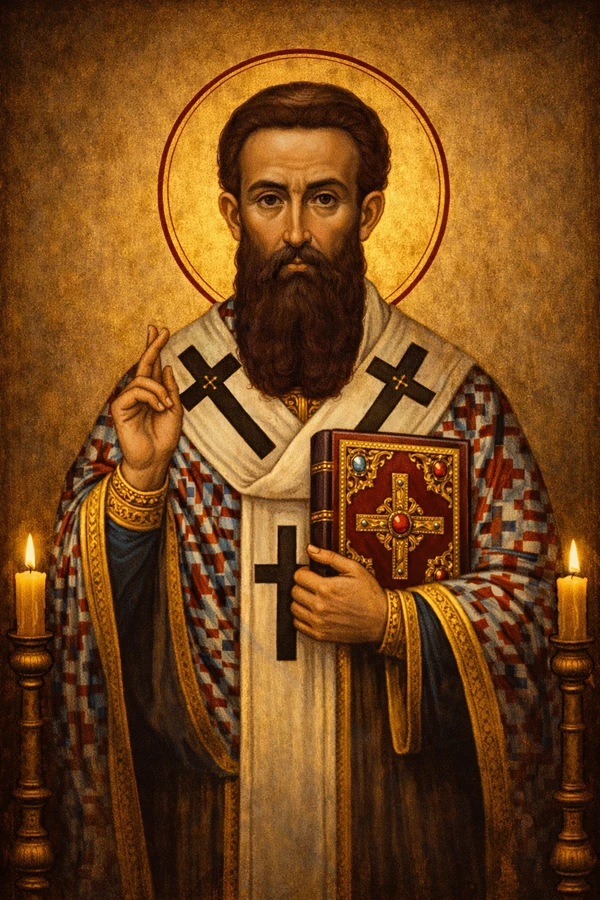
GREGORY PALAMAS · 14TH CENTURY · HESYCHAST
Triads in Defense of the Holy Hesychasts
Summary and key themes of this work
Palamas's masterwork — nine treatises organized as three sets of three, written between 1338 and 1341 in response to the philosopher Barlaam's attacks on the hesychast monks of Mount Athos. Barlaam denied that the monks could genuinely experience God; Palamas responded with a comprehensive theology of divine self-communication. The central argument: God's essence remains absolutely unknowable, but God's uncreated energies — his love, his light, his grace — are genuinely divine and genuinely experienced by those who pray. The Triads are dense and polemical, but their underlying question is one of the most important in all theology: can God truly be encountered, or is all religious experience merely human projection? Palamas's answer — that the light of Tabor was uncreated, divine, and real — became the official teaching of the Orthodox Church.
Triads in Defense of the Holy Hesychasts is a central text in the Christian mystical tradition, offering insight into the spiritual life, the nature of divine union, and the transformation of the soul.
This work is central to the Hesychast tradition, shaping the understanding of the spiritual life and the soul's journey toward union with God.
Selected Passages
God is not only beyond knowledge, but also beyond unknowing.
The light which shone on Tabor was not a created symbol but the very glory of God.
The grace of the Spirit is not something outside God, but is his very energy.