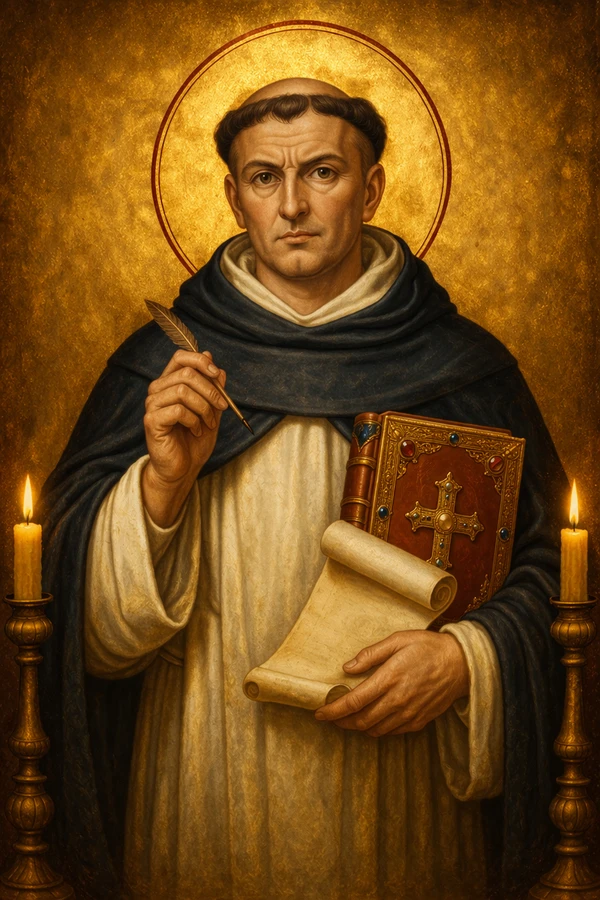
THOMAS AQUINAS · 13TH CENTURY · DOMINICAN
Summa Theologiae
Summary and key themes of this work
The most influential work of systematic theology ever written — nearly two million words organized in three parts covering God's nature and existence, the moral life and the virtues, and the person of Christ and the sacraments. Aquinas structured the work as a series of questions, each divided into articles that present objections, a counter-argument, a response, and replies to each objection. The format is scholastic, but the content ranges from the most abstract metaphysics (the simplicity of God, the nature of being) to the most practical ethics (justice, temperance, the morality of specific acts). Aquinas left the Summa unfinished after his mystical experience in December 1273 — the final section on the sacraments was completed by his students from his earlier writings. The work remains the standard reference in Catholic theology.
Summa Theologiae is a central text in the Christian mystical tradition, offering insight into the spiritual life, the nature of divine union, and the transformation of the soul.
This work is central to the Dominican tradition, shaping the understanding of the spiritual life and the soul's journey toward union with God.
Selected Passages
Grace does not destroy nature but perfects it.
God is sheer being, subsisting of itself. He is to all other beings the cause of their being.
To know that God exists in a general and confused way is implanted in us by nature. But this is not to know absolutely that God exists.