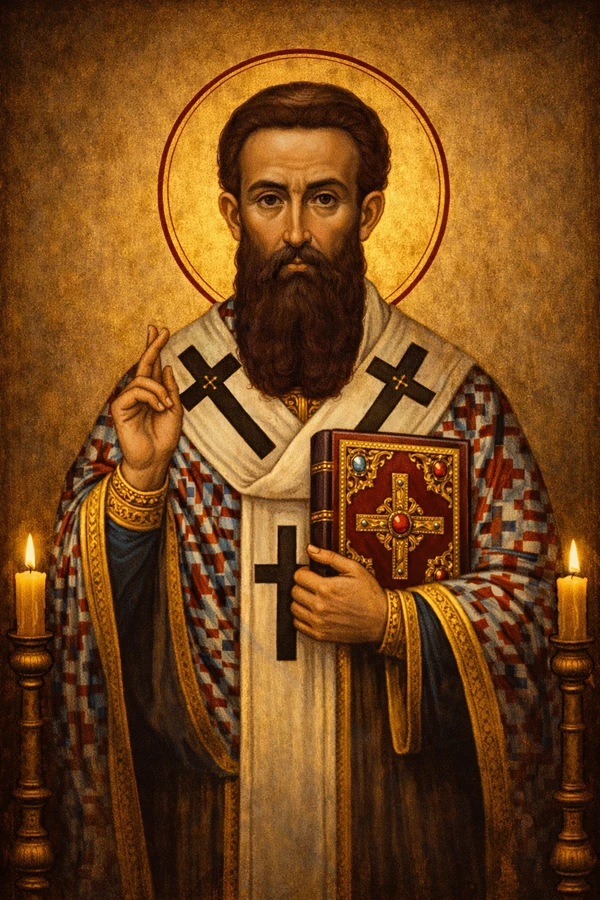
GREGORY PALAMAS · 14TH CENTURY · HESYCHAST
The One Hundred and Fifty Chapters
Summary and key themes of this work
Written after the triumph of Palamism at the Council of 1347, the Capita 150 is considered equal in importance to the Triads in the Palamite corpus — and in some ways more accessible. Where the Triads are polemical and argumentative, shaped by the heat of controversy with Barlaam the Calabrian, the One Hundred and Fifty Chapters steps back and reflects on the broader doctrinal context: the nature of human knowledge, the image of God in man, the consequences of the Fall, and the means of restoration. The chapters are arranged in the aphoristic style of the Philokalia — short, self-contained, suited to slow reading and meditation. This is Palamas at his most synthetic: drawing together hesychast spirituality, the essence-energies distinction, and a careful engagement with the natural philosophy of his day into a single, integrated vision of the human person called to participate in the uncreated light of God.
The One Hundred and Fifty Chapters is a central text in the Christian mystical tradition, offering insight into the spiritual life, the nature of divine union, and the transformation of the soul.
This work is central to the Hesychast tradition, shaping the understanding of the spiritual life and the soul's journey toward union with God.
Selected Passages
The mind that has been made worthy to know itself has ascended to know God, as far as this is possible.
God is not only beyond knowledge but beyond unknowing.
The light of the age to come is not a symbol. It is the very grace and radiance of God, truly communicated to those who are worthy.