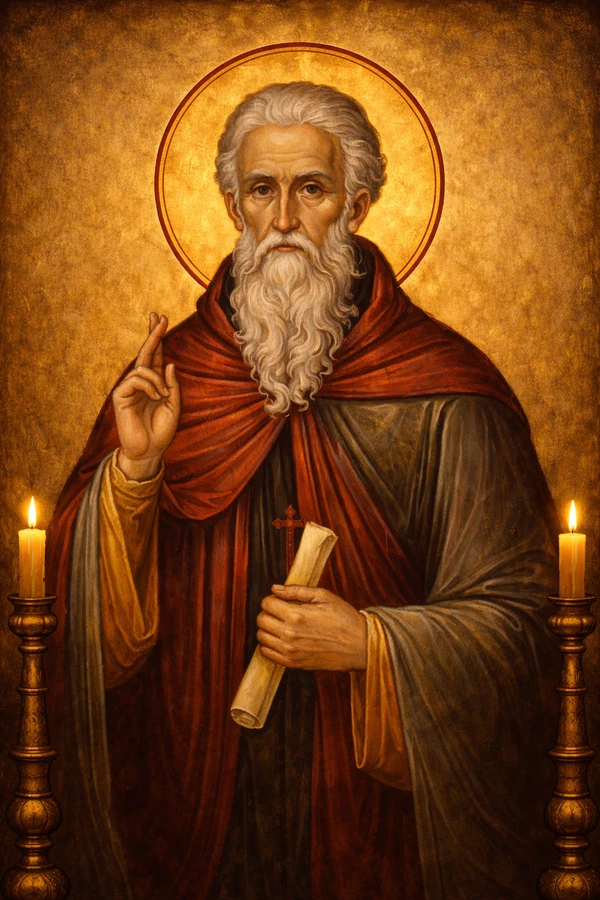
JOHN CLIMACUS · 7TH CENTURY · SINAITE
The Ladder of Divine Ascent
Summary and key themes of this work
The most widely read handbook of the spiritual life in the Eastern Christian tradition, composed around 600 AD at the monastery on Mount Sinai. The Ladder presents the ascetical life as thirty steps — corresponding to the thirty hidden years of Christ's life — ascending from renunciation of the world to the summit of love. The early steps confront the passions with unflinching honesty; the middle steps cultivate the active virtues; the final steps open onto prayer, stillness, and dispassion. John writes in short, paradoxical sentences that function like spiritual grenades — each one designed to detonate a comfortable assumption. The work is demanding and occasionally severe, but its final rung is not achievement but agape: love that crowns and completes every preceding effort. The famous Ladder icon, showing monks climbing while demons drag them down, has made this text's imagery part of the visual vocabulary of Eastern Christianity.
The Ladder of Divine Ascent is a central text in the Christian mystical tradition, offering insight into the spiritual life, the nature of divine union, and the transformation of the soul.
This work is central to the Sinaite tradition, shaping the understanding of the spiritual life and the soul's journey toward union with God.
Selected Passages
The growth of fear is the starting point of love, and total purity is the founding of theology.
Ascend, my brothers, ascend eagerly. Let your hearts resolve to the climb.
Do not be surprised that you fall every day; do not give up, but stand your ground courageously. And assuredly the angel who guards you will honor your patience.