← Back to Maximus the Confessor
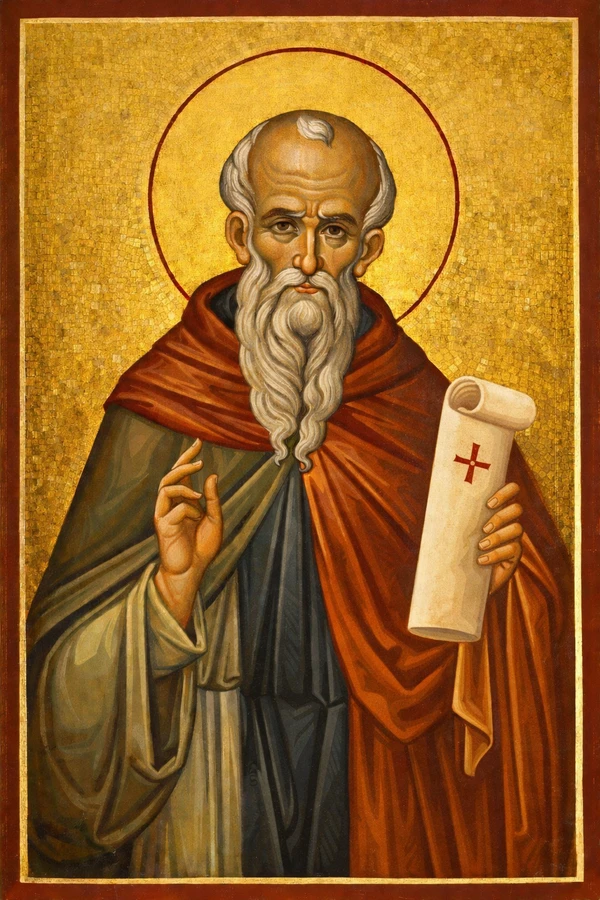
MAXIMUS THE CONFESSOR · 7TH CENTURY · BYZANTINE
Four Hundred Chapters on Love
Summary and key themes of this work
Written as a gift to the abbot Elpidios, this is the most widely read of Maximus the Confessor's works and the one most cherished in the Philokalia tradition. Arranged in four centuries of one hundred chapters each — mirroring the four Gospels — it is not a systematic treatise but a collection of distilled spiritual counsels on the nature of love, detachment, prayer, and the passions. Maximus himself notes in the preface that the chapters are not his own inventions but condensations from the holy fathers, compressed for easy remembrance. This is exactly the kind of work Maximus intended to be read a few chapters at a time, slowly, as a guide for the interior life. The Logos theology that runs through his other writings is present here too, but in a more intimate, practical register: love of God and love of neighbor are not two commandments but a single reality, and the person who has been drawn into divine love cannot help but see every other person as a participant in the same divine image.
Four Hundred Chapters on Love is a central text in the Christian mystical tradition, offering insight into the spiritual life, the nature of divine union, and the transformation of the soul.
This work is central to the Byzantine tradition, shaping the understanding of the spiritual life and the soul's journey toward union with God.
Selected Passages
Love is a holy state of the soul, disposing it to value knowledge of God above all created things.
When in the intensity of its love for God the intellect goes out of itself, then it has no sense of itself or of any created thing. For when it is illumined by the infinite light of God, it becomes insensible to everything made by Him, as the eye becomes insensible to the stars when the sun rises.
All the virtues co-operate with the intellect to produce this intense longing for God, but pure prayer above all.