Prayer to the Logos
— Constructed from Ambigua
O Christ, Logos of God, unite all things in Yourself and draw us into divine communion.
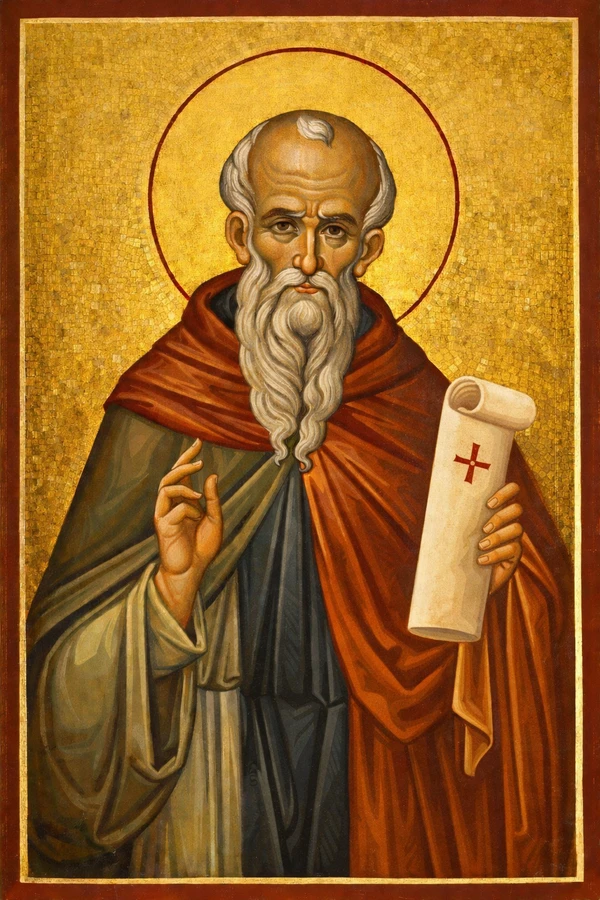
Maximus the Confessor
Maximus the Confessor was a Byzantine monk and theologian whose writings offer one of the most profound syntheses of Christian cosmology and spirituality.
Maximus the Confessor is a major figure in the Christian mystical tradition, whose writings continue to shape theology, spirituality, and contemplative practice.
Biography
About
Maximus the Confessor was a Byzantine monk and theologian whose writings offer one of the most profound syntheses of Christian cosmology and spirituality.
Life
He defended the doctrine that Christ possesses both a divine and human will, suffering exile and mutilation for his defense of orthodoxy.
Theological Vision
Maximus described the Logos as the unifying principle of creation. Through Christ the entire cosmos is drawn into divine communion.
Influence
His vision of theosis and cosmic redemption shaped Eastern Orthodox theology and influenced later Christian mystical thought.
Major Works
Resolutions of difficult passages in Gregory of Nazianzen and Pseudo-Dionysius, revealing Maximus's deep integration of Logos theology and mystical vision.
A mystagogical commentary on the Divine Liturgy, showing how the Church's worship enacts and participates in the cosmic redemption accomplished by Christ.
Responses to sixty-five difficult scriptural passages, weaving together exegesis and Maximus's theology of the Logos, creation, and deification.
Four hundred short reflections on the nature of love, organized in groups of one hundred, offering a practical guide to the ascent toward God.
Quotes
Selected passages drawn from the writings of Maximus the Confessor.
The Word of God, very God, wills always and in all things to accomplish the mystery of His embodiment.
Ambigua — PG 91:1084
The one who loves God cannot help but love every human being as himself.
Four Hundred Texts on Love — I.13
God and man are paradigms of one another.
Ambigua — PG 91
The Logos of God is hidden in all things.
He who knows the mystery of the cross and the tomb knows the reasons of all things.