Prayer of Endless Ascent
— Constructed from Life of Moses
Draw me ever onward, O Lord, into Your infinite mystery, that I may never cease to desire You.
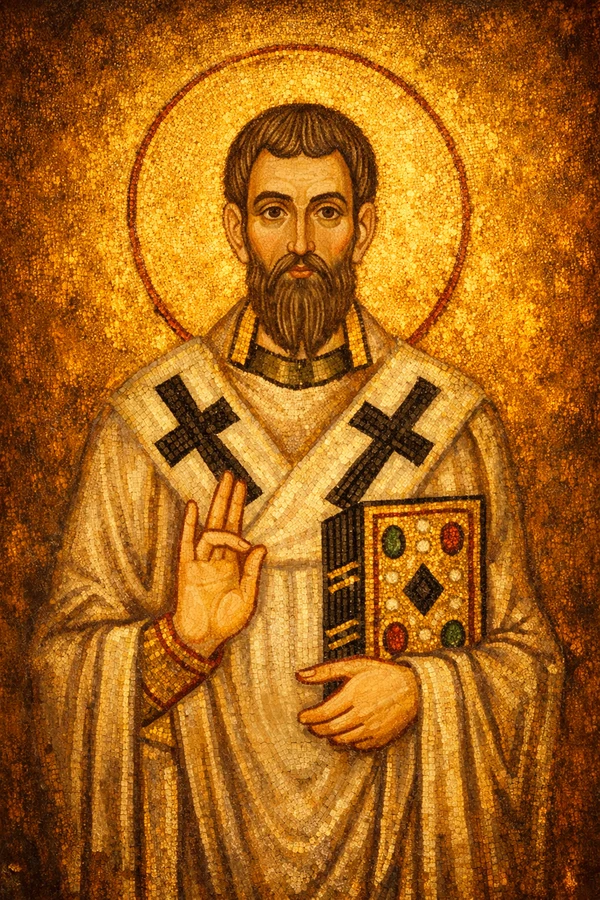
Gregory of Nyssa
Gregory of Nyssa was one of the Cappadocian Fathers and among the most profound mystical theologians of the early Church.
Gregory of Nyssa is a major figure in the Christian mystical tradition, whose writings continue to shape theology, spirituality, and contemplative practice.
Biography
About
Gregory of Nyssa was one of the Cappadocian Fathers and among the most profound mystical theologians of the early Church.
Life
Brother of Basil the Great, Gregory became bishop of Nyssa and contributed to the defense of Nicene orthodoxy while developing a distinctive mystical theology.
Theological Vision
Gregory taught that the soul's journey toward God is endless because God is infinite. This eternal progress toward divine life, known as epektasis, reveals the inexhaustible depth of the divine mystery.
Influence
His mystical theology influenced later thinkers such as Pseudo-Dionysius and Maximus the Confessor and remains central to the Christian contemplative tradition.
Major Works
An allegorical reading of Moses's life as a model of the soul's endless ascent toward God, embodying Gregory's doctrine of epektasis — infinite progress into the divine mystery.
Fifteen homilies reading the Song of Songs as a map of the soul's mystical ascent into the divine darkness that lies beyond all knowledge and concept.
On the Soul and the Resurrection
A dialogue with his dying sister Macrina on the immortality of the soul and the resurrection, modeled on the style of Plato's Phaedo.
A systematic presentation of Christian doctrine addressing sin, redemption, the incarnation, baptism, and the Eucharist.
Quotes
Selected passages drawn from the writings of Gregory of Nyssa.
Concepts create idols; only wonder comprehends anything.
Life of Moses — II.163
The true vision of the One we seek consists in this: in not seeing.
Life of Moses — II.163
This truly is the vision of God: never to be satisfied in the desire to see Him.
Life of Moses — II.239
Every desire for the Beautiful which draws us onward is intensified by the very progress toward it.